Recent Articles Latest News Special Features Press Releases
Theme Park Profiles Ride Profiles Construction HQ Submit Parks/Rides
Latest Photos Construction HQ Submit Your Photos
Parkz Forums Community Guidelines
ThemeParkPhotography.com
About Parkz Info for Park Operators Our History Our Staff & Contributors Join the Team Legal Information Frequently Asked Questions Contact Us
Your Profile (main site) Your Profile (forums) Your Photos Submit Parks / Rides Submit Photos Submit Article Logout
Quick Links
Related Parks:
Rate
(0%) (0 Votes)
More articles:
Search Articles

Six Flags files for Bankruptcy

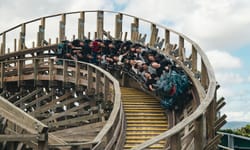
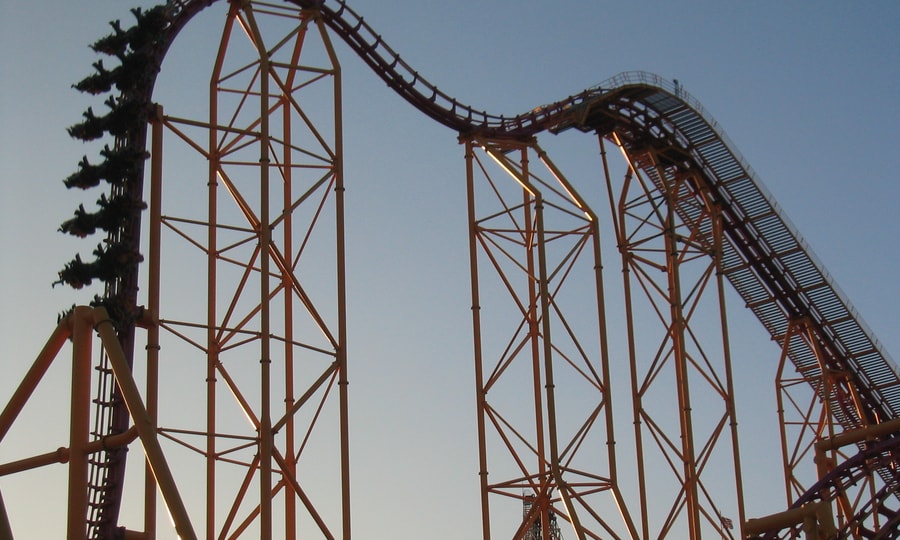
Plummeting face-first... in light of escalating debt levels, Six Flags has filed for chapter 11 bankruptcy protection. Photo: Richard Wilson.

By Richard Wilson
June 14, 2009

Six Flags, one of North America's largest theme park chains, has filed for bankruptcy. What does this mean for their business model and the theme parks it has inspired theme parks around the world?
In an unsurprising move by the US theme park giant, Six Flags has filed for Chapter 11 Bankruptcy protection, in order to cut USD$1.8 billion in debt. The company has been struggling for a number of years with consistent losses and most recently has downsized by shedding many of their under-performing theme parks.

With commentators in recent years decrying the company for its lack of cohesive business strategies that reflected on their annual balance sheets, it comes as no real surprise. All this latest development does is take the question mark that was put next to their business model and turn it into a cross.

Also not surprisingly, the current economic situation of the world and in particular the United States plays little role in the announcement. Six Flags saw record revenue in 2008, but it simply wasn't enough to curb growing debt that came about largely through reckless expansion of the company that started in the 1990s and continued into the 2000s.

The overriding model that was put into place at their parks across the United States was one of cutting costs while regularly adding new attractions. The fundamental thinking was that new blockbuster attractions would keep the parks' attendance up, while reducing expenditure in other areas of the park would boost profits. And this worked for a few years... sort of.

The biggest cause of this latest announcement was its aggressive acquisition of regional theme parks across the United States. They'd buy mid-sized regional theme parks, spend a hefty sum on shiny new attractions to rebrand the park as Six Flags, and watch them do wonders for a year or two. This led to huge levels of debt that quickly became unmanageable, accelerated by the first issue of letting the overall quality of the non-new aspects of the parks go to waste in an effort to cut costs.

The company essentially banked on the notion that the average park-goer sees shiny big rides and attractions and makes their decision to buy then and there. It was assumed that the $20 parking fee, overpriced and low-quality food, minimal service and slow or closed attractions would all be overlooked and not impact their decision to visit. The problem was it seems that many people would visit once, but simply not return.

Unfortunately Six Flags seem to have been counting on a lack of emotional response. They figured if enough people saw the ad on TV for the shiny new ride, turned up and paid for all the bells and whistles then they'd be home free. Unfortunately, it seems park-goers do respond negatively when they're faced with one good thing and a dozen mediocre or bad things. There's no readily available market research that shows this to be the case, but when you consider that Six Flags offers a product fundamentally identical to its major competitors like Cedar Fair, and with similar marketing strategies in place, it's plain that maybe the (unintentional) ghetto vibe that every Six Flags park I've walked into has presented really does rub people the wrong way.

The upturn in attendance for the company in 2008 could be put down to strategies implemented in recent years to move them away from this failed business model. It seems they were on track, but maybe a decade too late. Six Flags have vowed that filing for Chapter 11 won't affect the operation of their parks, but don't expect to see the real affects of all this until 2010.

Anyone that's read the Parks Forums in the past year or so should see that there are many parallels to be drawn between Six Flags' model and how Australia's theme parks are becoming. Dreamworld has been on a path of aggressive cost-cutting for several years now, while it only seems to have just begun at WVTP's Sea World and Warner Bros. Movie World.

Granted, anything like Six Flags' filing for bankruptcy is incredibly unlikely to occur with our profitable theme parks, but should our parks be reconsidering just what does and doesn't constitute a sound business model and long-term strategy for the sake of maintaining this profitability?

Richard Wilson has written 224 articles for Parkz and Submitted 1,860 photos in our Gallery.

Comments

Posted by Gazza at 1:44pm, 14 Jun 09
QUOTE
The overriding model that was put into place at their parks across the United States was one of cutting costs while regularly adding new attractions. The fundamental thinking was that new blockbuster attractions would keep the parks' attendance up, while reducing expenditure in other areas of the park would boost profits.....
Anyone that's read the Parks Forums in the past year or so should see that there are many parallels to be drawn between Six Flags' model and how Australia's theme parks are becoming. Dreamworld has been on a path of aggressive cost-cutting for several years now, while it only seems to have just begun at WVTP's Sea World and Warner Bros. Movie World.

I thought Dreamworld's strategy was to do the cost cutting, but then not add blockbuster attractions rolleyes.gif

We'll never see the same situation as Six Flags, mainly because our parks don't overcapitalise, and have better service than Six Flags, but still
I mean, cost cutting isn't bad if you are doing stuff like reducing wastefulness and choosing suppliers more carefully, but stuff like switching off special effects, deferring upkeep and closing attractions can only be damaging in the long term, and will inevitably negate any money saved.

I find it interesting though that the parks that do consistently well are the ones that put quality foremost: Disney, Busch, Universal, plus a few of the European ones. I wish more parks would just follow their strategies, that way the good returns come naturally, rather than a result of reducing quality.

Posted by Richard at 10:52pm, 14 Jun 09
Yeah, the big picture of this Six Flags failure is pretty irrelevant to our parks as the likelihood of this sort of financial failings is all but impossible given their relatively conservative expansions and acquisitions. But it goes to show plainly that people don't like a substandard theme park, and in Six Flags' case a substandard park was caused almost directly by cost cutting.

If people didn't notice that year after year they were getting less despite spending more and more, then Six Flags' reckless growth would have been far less damaging than it has been.

If our parks think they can reduce the quality of their product without people noticing, then I think they're kidding themselves, and unfortunately that seems to be the trend of recent years.

The crazy thing is I think that no park in Australia is copying Six Flags. It seems that they've all come to the same flawed conclusion by applying business strategies that aren't suited to the long-term nature of the theme park industry.
Posted by AlexB at 2:33pm, 15 Jun 09
On the brighter side, there are quite a few kick-ass coasters out there that might go for a song if they go into liquidation...
Posted by phelpcol at 10:20pm, 20 Jun 09
It is a pity they have gotten into much trouble. I have been to several of their parks and even written to them about my experiences (got some free tickets for my comments).
As I see it they can fix this easily by changing their culture as follows:
1) The food could be better. Although I have to say I don't go to eat good food. I will acknowledge though that this is important to others.
2) Customer service. You would expect this in the US but Six Flags seemed to breed a customer service culture that just sucks. Waited 10 minutes once at magic Mountain for two servers to finish their private conversation before they took my lunch order.
3) Speed up ride load times. Some parks/rides are horrendously slow. Safety is great and important but again pivate chatting and skylarking by attendants should not slow up load times.
4) Get ride of additional costs. car parking fees and locker costs suck. You pay enough to get into the park but then to get slugged a US dollar for a locker to secure a hat and glasses does not go down well. I travelled to these parks mainly by myself while on business and put a lot of money into these lockers.
As I said I think they can change this easily and I hope they do. They have some excellent rides (kingda Ka, X, Superman, Riddlers revenge) and I would hate to see them close.
Posted by cadboy at 8:24am, 21 Jun 09
QUOTE (phelpcol @ Jun 20 2009, 10:20 PM)
4) Get ride of additional costs... locker costs suck.

Remember that locker costs are standard at most if not all parks, so it is nothing exclusive to Six Flags as I am sure you are aware.
Posted by Gazza at 7:16pm, 21 Jun 09
QUOTE
Waited 10 minutes once at magic Mountain for two servers to finish their private conversation before they took my lunch order.

You didn't think to butt in?
Posted by joz at 12:20am, 23 Jun 09
I think he's talking about the $1 ride lockers. I haven't seen the $1 locker charge at rides anywhere except Six Flags and our parks. The thing is they really piss people off, and for the sake of $1 is it really worth pissing heaps of people off?
Posted by phelpcol at 9:58pm, 25 Jun 09
That's right. The only other park where I saw lockers was at Chemlong Paradise in Guangzhou, China for their drop coaster.
On the subject of butting in, sure I did. On commenting to them when they finally served me, I was promptly greeted with a "it was none of my business" response. I reported it to the SFMM office and that was the main reason for writing SF HQ a letter.
You need to be logged in to post comments. Membership is 100% free — join today!